فرشید مرادی، مهندس برق جوان و اهل فولادشهر، شامگاه ۱۸ دیماه ۱۴۰۴ در جریان اعتراضات، هدف گلوله قرار…
انتشار: 2026/08/21 13:23 UTCدریافت: 2026/08/22 05:40 UTCآخرین مشاهده: 2026/08/22 05:40 UTC
فرشید مرادی، مهندس برق جوان و اهل فولادشهر، شامگاه ۱۸ دیماه ۱۴۰۴ در جریان اعتراضات، هدف گلوله قرار گرفت؛ گلولهای که به قلبش اصابت کرد و به زندگی او پایان داد.پیکر فرشید پس از چند روز به خانوادهاش تحویل داده شد، اما آنان اجازه برگزاری مراسمی آزادانه را نیافتند. فرشید را کشتند و حتی سوگواری برای او را نیز محدود کردند؛ اما نام و یادش باقی خواهد ماند.@iranhrdc#DigitalBlackoutIran#iran_strikes #iran_human_rights#iranmassacre#فرشید_مرادی
پستهای تلگرام — مرکز اسناد حقوق بشر ایران Iran Human Rights Documentation Center
Children Are Not Soldiers. Children Are Not Shields.For decades, children in Iran have faced recruitment, militarization, and exposure to state repression—including during protests and armed conflict.Iran is a State Party to the Convention on the Rights of the Child. Yet its obligations have been repeatedly violated.Children must be protected—not recruited, militarized, or used in repression.@iranhrdc#ChildrensRights #CRC #Iran #ChildrenNotSoldiers #ChildrenNotShields #IHRDC #AlternativeReport
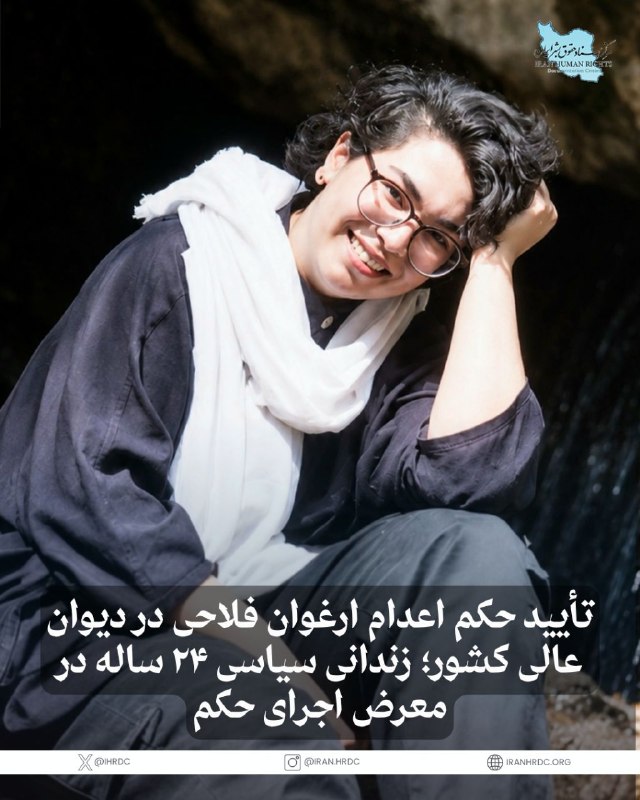
حکم اعدام ارغوان فلاحی، زندانی سیاسی ۲۴ ساله محبوس در زندان اوین، پس از بررسی در دیوان عالی کشور تأیید شده است. این حکم پیشتر از سوی شعبه ۱۵ دادگاه انقلاب تهران به ریاست قاضی ابوالقاسم صلواتی و با استناد به اتهام «بغی» صادر شده بود.به گزارش خبرگزاری هرانا، دادگاه انقلاب فلاحی را در تیرماه ۱۴۰۵ به اعدام محکوم کرد. در گزارشهای پیشین آمده بود که دادگاه با استناد به ماده ۲۸۷ قانون مجازات اسلامی و با طرح ادعاهایی درباره عضویت او در گروههای مخالف جمهوری اسلامی و «اقدام مسلحانه»، این حکم را صادر کرده است. جزئیات روند رسیدگی در دیوان عالی کشور و شعبه تأییدکننده رأی تاکنون منتشر نشده است.فلاحی اوایل بهمنماه ۱۴۰۳ به دست نیروهای امنیتی بازداشت و ابتدا به بند ۲۰۹ زندان اوین، تحت اداره وزارت اطلاعات، منتقل شد. بنا بر گزارشهای منتشرشده، او بخش قابلتوجهی از دوران بازداشت خود را در بندهای امنیتی ۲۰۹ و ۲۴۱ گذرانده و در این مدت تحت فشارهای شدید روانی و بازجویی برای گرفتن اعترافات اجباری قرار داشته است. گفته میشود بخشی از بازجوییها به کشتهشدن دو قاضی، محمد مقیسه و علی رازینی، ارتباط داشته است؛ با این حال، تاکنون اطلاعات مستقلی که انتساب این پرونده به فلاحی را اثبات کند، منتشر نشده است.پس از حمله اسرائیل به زندان اوین در خردادماه ۱۴۰۴، فلاحی ابتدا به زندان تهران بزرگ و سپس به زندان قرچک ورامین منتقل شد. او در ادامه بار دیگر به زندان اوین بازگردانده شد و اکنون در این زندان نگهداری میشود.این نخستین بازداشت ارغوان فلاحی نیست. نیروهای امنیتی در آبانماه ۱۴۰۱ نیز او و پدرش را بازداشت کرده بودند. شعبه ۲۶ دادگاه انقلاب تهران به ریاست قاضی ایمان افشاری در آن پرونده، فلاحی را به اتهامهای «اجتماع و تبانی» و «تبلیغ علیه نظام» به دو سال حبس محکوم کرد. او پس از تحمل کامل این دوره از حبس آزاد شد، اما مدتی بعد بار دیگر بازداشت و این بار با حکم اعدام روبهرو شد.@iranhrdc#DigitalBlackoutIran#iran_strikes #iran_human_rights#iranmassacre#ارغوان_فلاحی
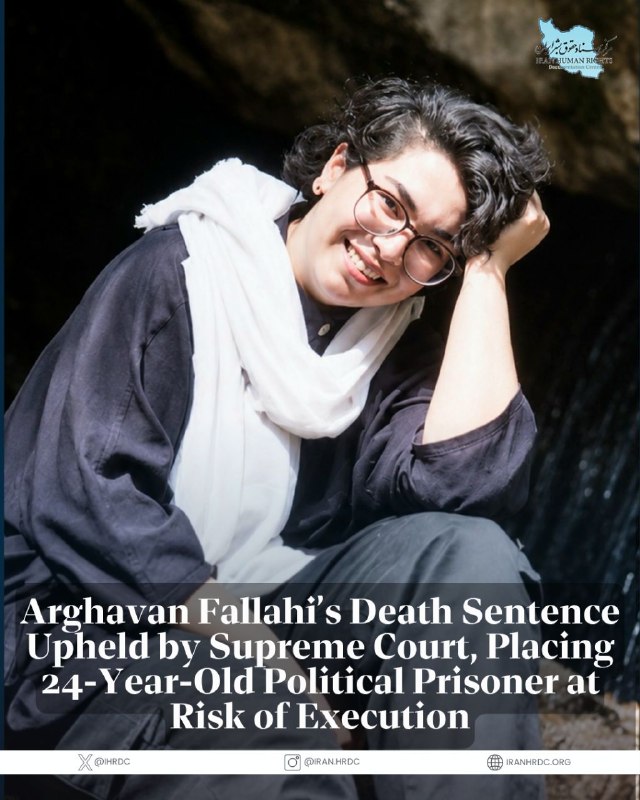
The Supreme Court has upheld the death sentence imposed on Arghavan Fallahi, a 24-year-old political prisoner held in Evin Prison. The sentence was previously issued by Branch 15 of the Tehran Revolutionary Court, presided over by Judge Abolghasem Salavati, on the charge of “armed rebellion against the Islamic Republic (Baghy).”According to HRANA, the Revolutionary Court sentenced Fallahi to death in July 2026. Previous reports indicated that the court invoked Article 287 of the Islamic Penal Code and based its ruling on allegations that she had joined groups opposed to the Islamic Republic and engaged in “armed activity.” No details have yet been released about the Supreme Court’s review of the case or the branch that upheld the sentence.Fallahi was arrested by security forces in late January 2025 and initially transferred to Ward 209 of Evin Prison, which is administered by the Ministry of Intelligence. According to published reports, she spent a significant part of her detention in the prison’s security wards 209 and 241, where she was subjected to severe psychological pressure and interrogated in an effort to extract forced confessions. Some of the interrogations were reportedly related to the killings of judges Mohammad Moghiseh and Ali Razini. However, no independently verifiable evidence linking Fallahi to that case has been made public.Following the Israeli attack on Evin Prison in June 2025, Fallahi was first transferred to Greater Tehran Prison and later to Qarchak Prison in Varamin. She was subsequently returned to Evin Prison, where she remains incarcerated.This is not Fallahi’s first arrest. Security forces previously detained her and her father in November 2022. In that case, Branch 26 of the Tehran Revolutionary Court, presided over by Judge Iman Afshari, sentenced her to two years in prison on charges of “assembly and collusion” and “disseminating propaganda against the Islamic Republic.” She was released after serving the full sentence but was arrested again several months later and now faces execution.@iranhrdc#DigitalBlackoutIran#iran_strikes #iran_human_rights#iranmassacre#arghavan_fallahi
نامهایشان را بگویید دخترانی که در اعتراضات دی ۱۴۰۴ کشته شدند • در جریان سرکوب دی ماه ۱۴۰۴، نیروهای امنیتی جمهوری اسلامی هزاران ایرانی را کشتند. در میان آنان دختران و زنان جوانی بودند که برای اعتراضی مسالمتآمیز به خیابان رفته بودند. • خانوادهها زیر فشار قرار گرفتند تا مراسم خاکسپاری را کوچک یا پنهانی و گاه شبانه برگزار کنند و درباره آن چه بر دخترانشان رفته بود علنی سخن نگویند. رسانههای حکومتی کشتهشدگان را «اغتشاشگر» خواندند. اینترنت روزها قطع بود و از همین رو ابعاد ماجرا مدتی پنهان ماند. • هزاران تن دیگر بازداشت شدند که دختران و زنان جوان نیز در میانشان بودند. بیشتر آنان بدون دسترسی به خانواده یا وکیل نگه داشته شدند. سرنوشت شماری از آنان هنوز نامعلوم است. • سودا اکرمیفرد، نازنینزهرا صالحی، غزل جانقربان، آرنیکا دباغ، ملینا اسدی، بهار شادمهری، کیمیا کامیاب، فائزه ایزدی، نازنین اسمیخانی، اسرا طاوسینیا، ثنا توسنگی، یلدا محمدخانی، ستایش صمدی، نیوشا حمیدی، شیوا جاوید، ملیکا شاهمرادی، فاطمهرها تاجیان، سمیرا خانی و بهار حسینی از جمله کشتهشدگان تأییدشدهاند. کشته شدگان بسیار بیشتر هستند ... • نام، آخرین چیزی است که یک حکومت دیکتاتوری میتواند بگیرد و نخستین چیزی که هر کسی میتواند بازگرداند. پس نام هایشان را تکرار کنید. امروز، و دی ماه، وقتی خبرها گذشتهاند و کسانی که فرمان کشتار را دادند حساب کردهاند که شما فراموش کردهاید. @iranhrdc#نامهایشان_را_بگویید #ایران #اعتراضات_ایران #دختران_ایران #روز_جهانی_دختر #از_نگاه_او #مرکز_اسناد_حقوق_بشر_ایران
Say Their Names Girls killed in the crackdown of January 2026 • During the crackdown of January 2026, the Islamic Republic’s security forces killed thousands of Iranians. Among them were girls and young women who had gone out to protest peacefully. • Families were pressured into small or secret burials, sometimes at night, and told not to speak publicly about what had happened to their daughters. State media called the dead “rioters.” The internet had been cut for days, so the scale of it stayed hidden for a time. • Thousands more were arrested, girls and young women among them. Most were held without access to their families or lawyers. Some remain unaccounted for. • Sevda Akramifard, Nazanin Zahra Salehi, Ghazal Janghorban, Arnika Dabbagh, Melina Asadi, Bahar Shadmehri, Kimia Kamyab, Faezeh Izadi, Nazanin Esmikhani, Esra Tavousinia, Sana Tousangi, Yalda Mohammadkhani, Setayesh Samadi, Niousha Hamidi, Shiva Javid, Melika Shahmoradi, Fatemeh-Raha Tajian, Samira Khani, Bahar Hosseini are among the confirmed deaths. There are many more ... • A name is the last thing a state can take, and the first thing anyone can give back. So repeat them. Today, and next January, when the news has moved on and those who gave the orders are counting on you having forgotten. @iranhrdc#SayTheirNames #Iran #IranProtests #GirlsRights #InternationalDayOfTheGirl #ThroughHerEyes #IHRDC
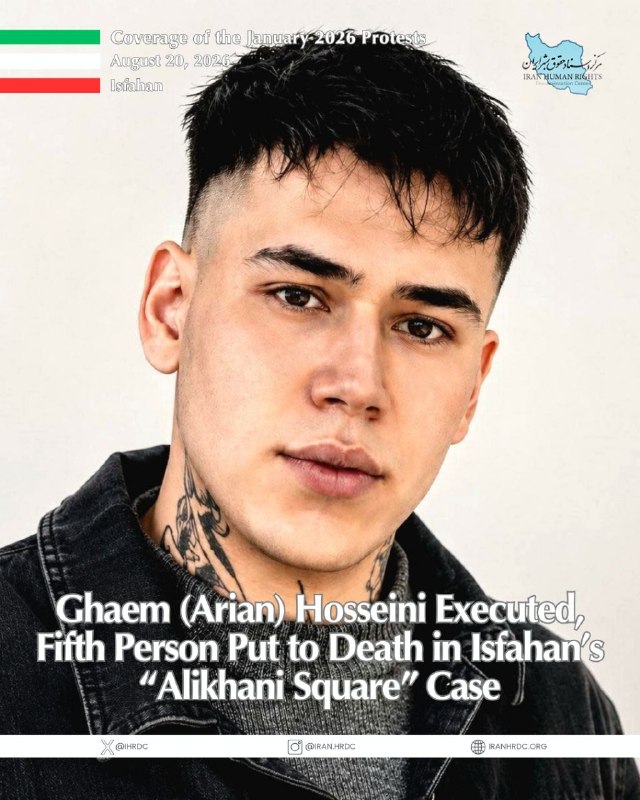
Ghaem (Arian) Hosseini, who was arrested in connection to the January 2026 protests in Isfahan, was executed on Thursday morning, August 20. His execution was based on national security-related charges and the account presented by the Islamic Republic’s judicial authorities in a case marred by serious reported violations of the right to a fair trial. Mizan News Agency, which is affiliated with Iran’s judiciary, announced the execution, stating that Hosseini’s death sentence had been upheld by the Supreme Court. The location of the execution was not disclosed.The case, commonly referred to as the “Alikhani Square” case, stems from events on January 8, 2026, during protests in the Malek-Shahr area of Isfahan, in which four police officers died. Without providing evidence that could be independently verified, the Islamic Republic’s judiciary accused Hosseini of involvement in the events that night and of setting fire to property belonging to a charity. He was sentenced to death on charges including “waging war against God” (moharebeh), “corruption on Earth” (efsad-e fel-arz), acting against national security, and destruction of public property. Mizan also cited statements and confessions attributed to defendants in the case, while no independent information has been made available about the circumstances under which those statements were obtained or whether the defendants had effective access to legal counsel during interrogation.Hosseini is the fifth person to be executed in connection with the case. Erfan Esfandiari and Golmohammad Mohammadi were executed on July 19, while Abolfazl Sepahi and Amirhossein Safari were executed on July 28. Fifteen defendants were initially sentenced to death. According to published information, one of those sentences was overturned by a higher judicial authority, while the death sentences of the other 14 defendants were upheld. Several defendants in the case therefore remain at risk of execution.Reports concerning the proceedings indicate that defense lawyers faced restrictions on effective access to case files, were unable to obtain copies of court rulings, and that hearings were conducted by videoconference. Families were also reportedly kept uninformed about the details of the charges and evidence, while the court disregarded evidence presented by the defense. Under these circumstances, the charges used as the basis for the death sentences were not adjudicated through proceedings that met fundamental fair-trial guarantees.@iranhrdc#DigitalBlackoutIran#iran_strikes #iran_human_rights#iranmassacre#ghaem_hosseini#arian_hosseini