🏴 Our channels
انتشار: 2026/07/06 11:19 UTC

🏴 Our channels

پستهای تلگرام — English Language & Grammar
Lalochezia describes the relief experienced through the act of swearing.This term refers to the sense of release or comfort that can occur when someone uses profanity. The concept is recognized in linguistic studies as an emotional response linked to language. Lalochezia illustrates how verbal expression of strong feelings, especially through swearing, can impact a person's sense of well-being.🏴 Our channels

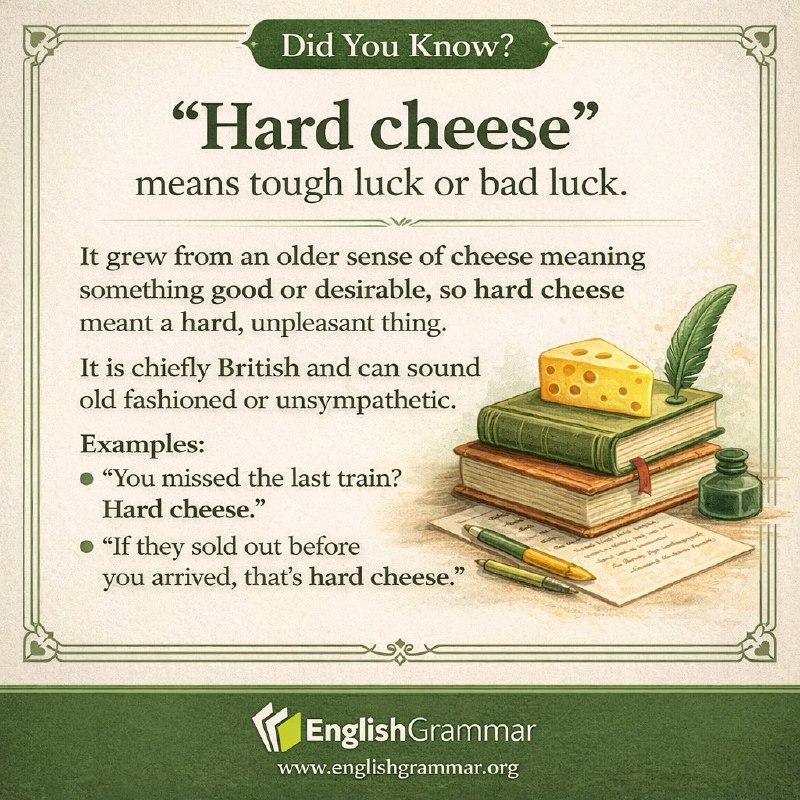
The phrase “hard cheese” refers to an expression meaning bad luck or misfortune. Its usage dates back to British English, where it was employed in informal contexts to comment on an unfortunate event or to express sympathy in a lighthearted manner.Historically, the term likely comes from the literal difficulty of cutting or working with physically hard cheese—serving as a metaphor for a tough or unfavorable situation. Over time, “hard cheese” established itself as a colloquial way of acknowledging someone’s unfortunate circumstances.The expression remains part of traditional British vernacular, although it is less commonly used in modern English.🏴 Our channels
The terms “require” and “request” have distinct uses in English grammar.“Require” indicates something is necessary or mandatory. It is typically used when a rule, law, or condition must be met. For example, an employer may require employees to wear identification badges at work.“Request” refers to asking for something in a formal or polite manner, without implying obligation. It is common in instances where permission, information, or cooperation is sought. For example, a manager may request a report from a team member.These terms are not interchangeable, as their meanings establish different levels of necessity and authority.🏴 Our channels

What “to cut some slack” means and how to use it🏴 Our channels

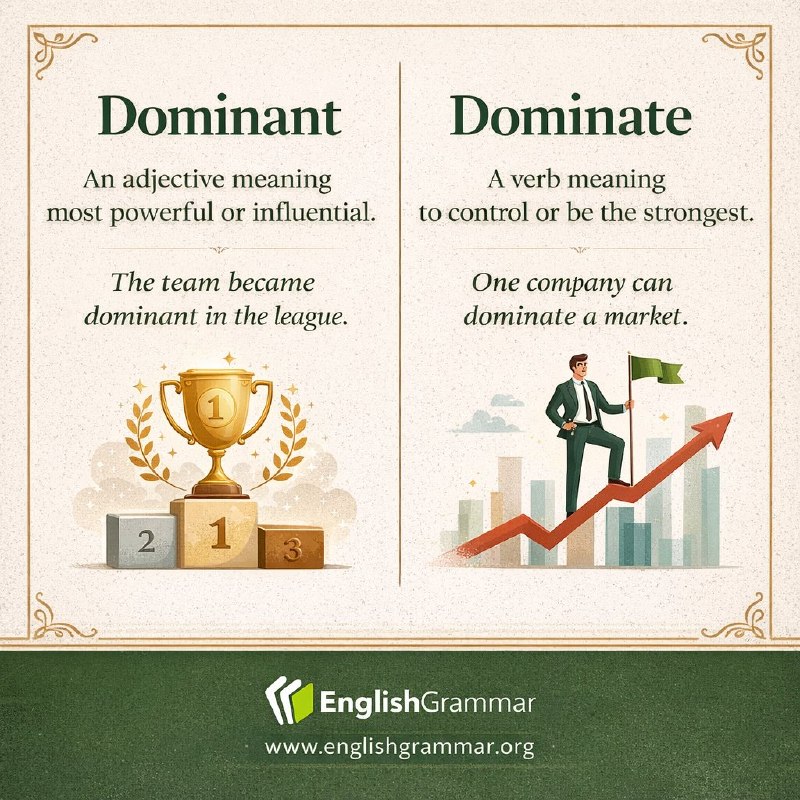
Dominant and dominate: understanding the distinctionThe word “dominant” functions as an adjective, describing something that has authority or is most important in a given context. In contrast, “dominate” is a verb that refers to the act of exercising control or having power over someone or something.The term “dominant” may be used in phrases such as “the dominant team,” pointing to one with greater influence. “Dominate,” however, is applied in statements like “they dominate the competition,” indicating an action performed.These terms are not interchangeable, as they belong to different grammatical categories and serve distinct roles in written and spoken English.🏴 Our channels
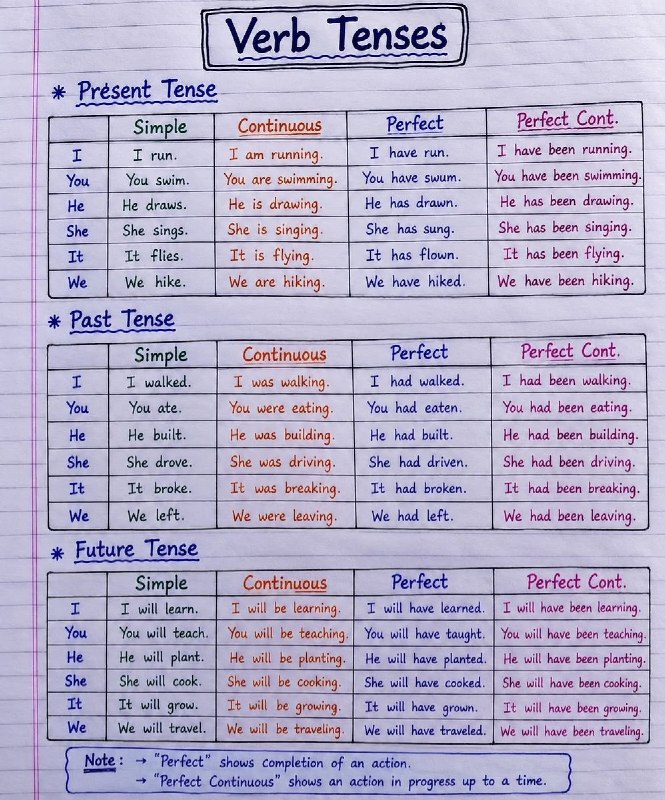
A summary of verb tenses is provided.The graphic details the structure and use of the twelve main English tenses. Each tense is listed with its affirmative, negative, and interrogative forms. Present, past, and future aspects are covered, including the simple, continuous, perfect, and perfect continuous forms.Readers can reference this overview for guidance on verb tense usage. The chart aims to support learners in forming sentences correctly across different time frames.🏴 Our channels